Clinicians and orthotists
A made-to-measure, ventilated cast from a scan of the patient's own arm, designed once and fitted to each patient in the pose they need.
 Brazo
Early access · GeometryWeave
Brazo turns a 3D scan of a hand and forearm into a ventilated cast that fits it, in the pose it has to hold, ready for your 3D printer. The fit runs on its own. We are letting people in a few at a time: join the waiting list and we will write to you when your place comes up.
You are on the list.
We will only write to you about Brazo, and never share your address. Privacy
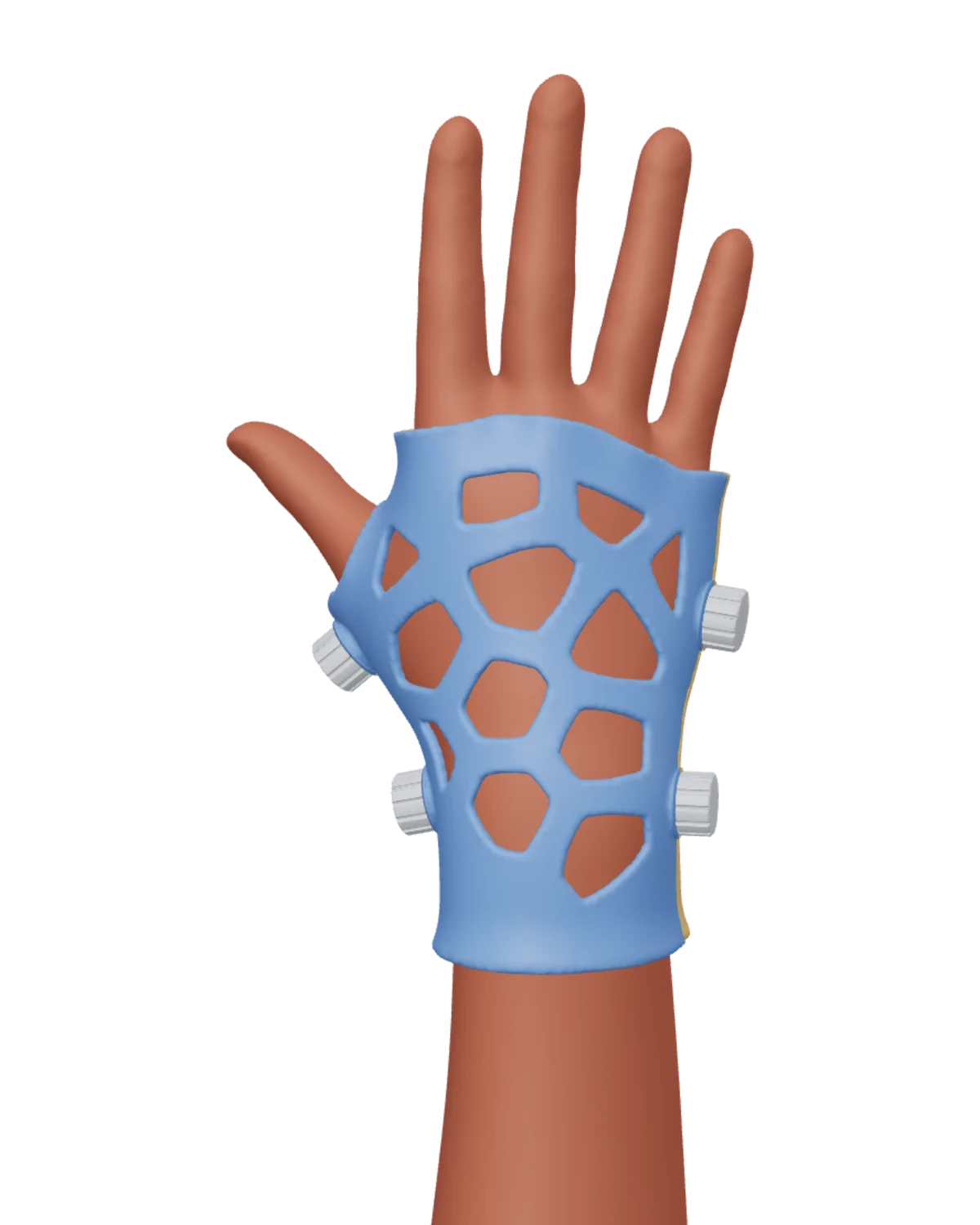
How it works
One arm all the way through: this one was scanned with the wrist bent.
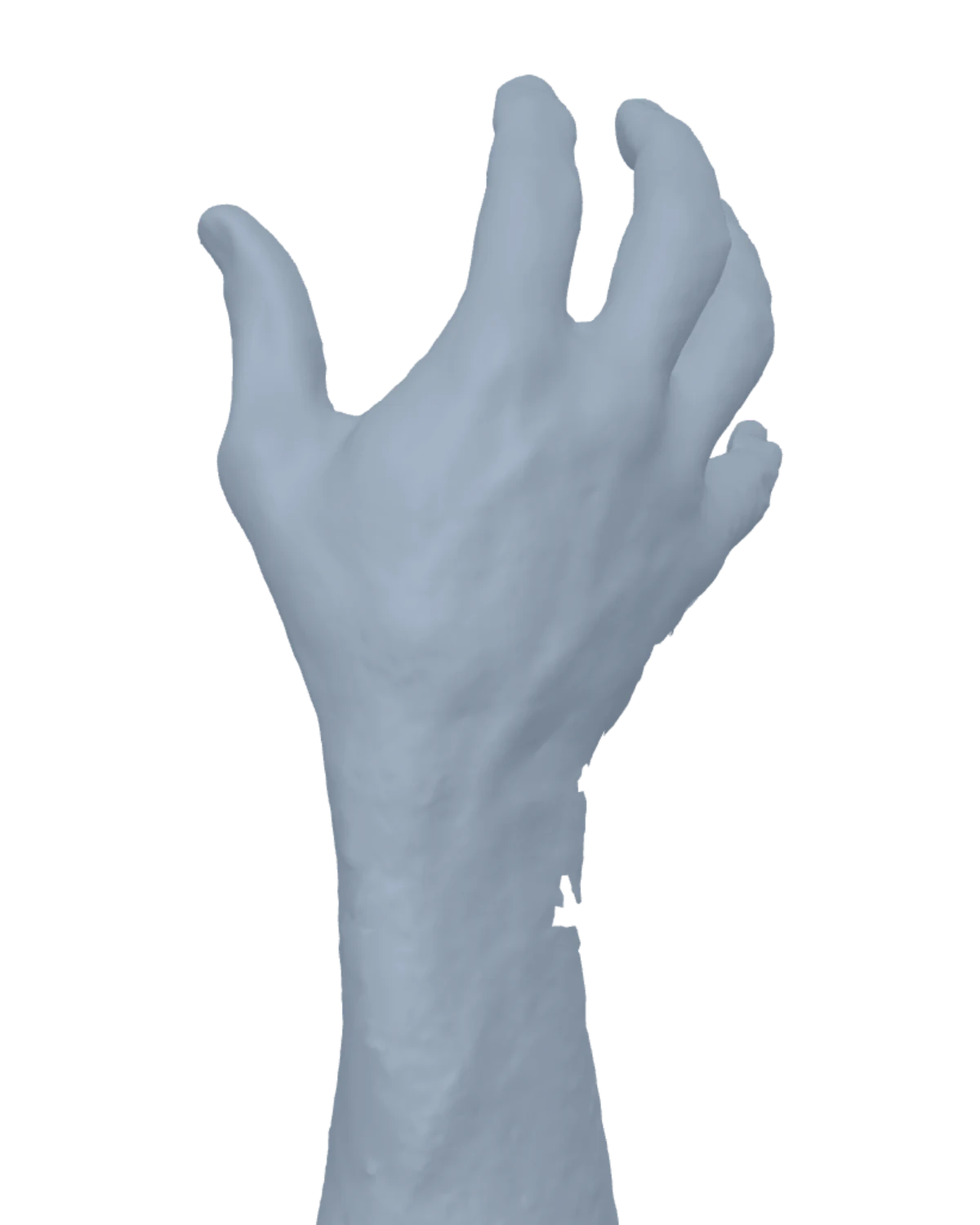
01
Bring a 3D scan of the arm, a mesh or a point cloud from any scanner, taken as the patient can hold it. Brazo keeps its real size all the way to the printer.
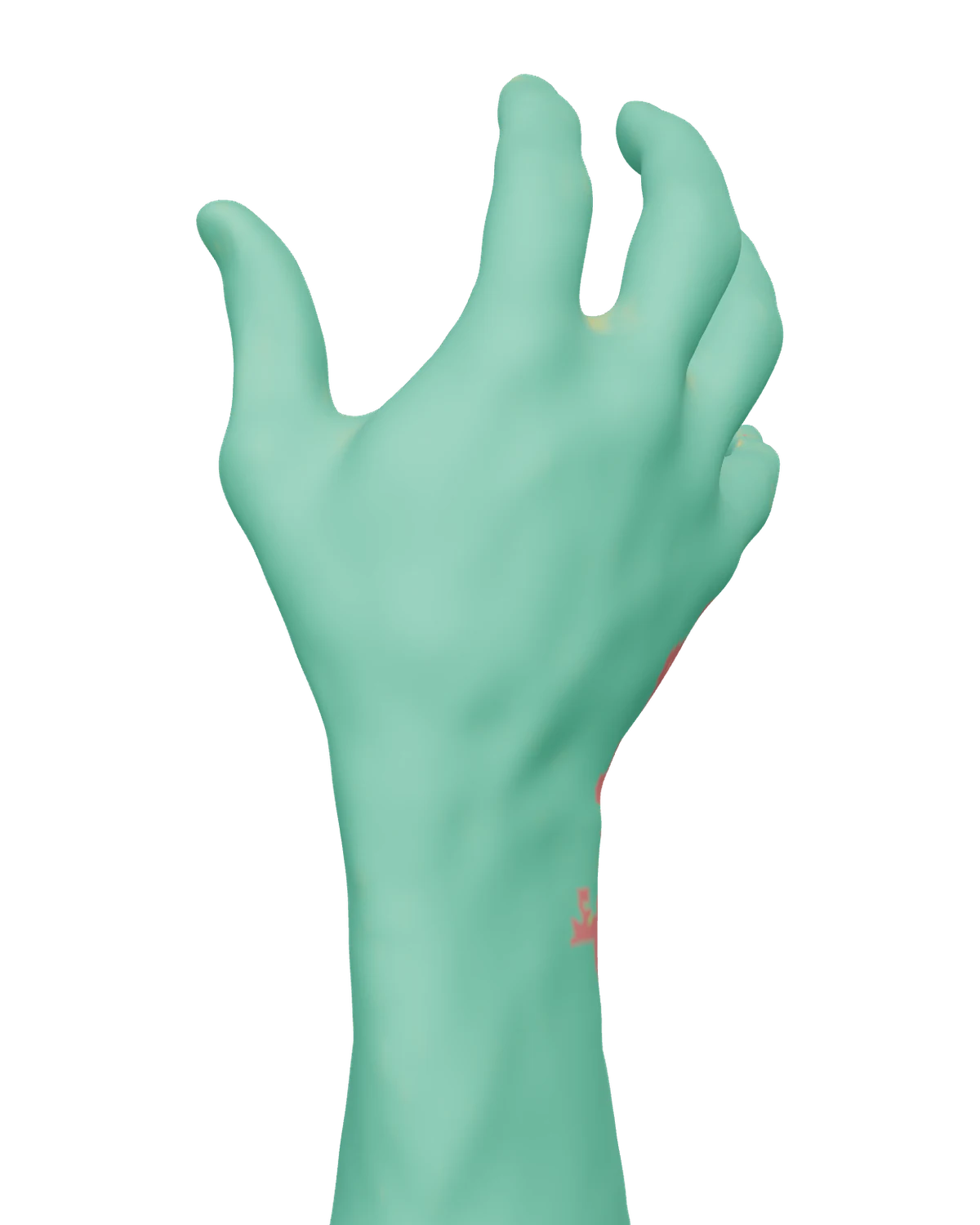
02
One button. Brazo tells a left hand from a right, fits an anatomical hand model about a millimetre from the scan in our tests, and fills in what the scanner missed.
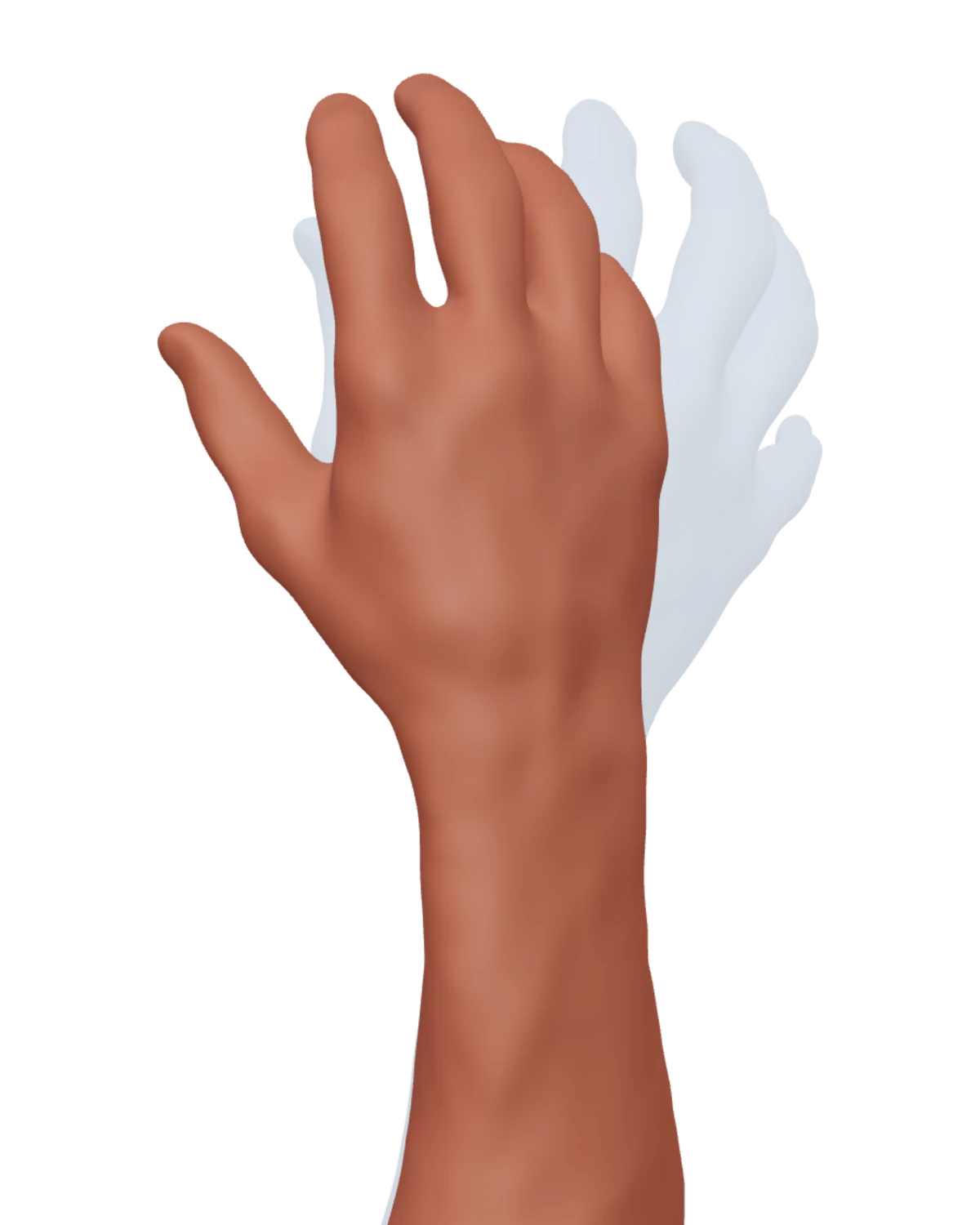
03
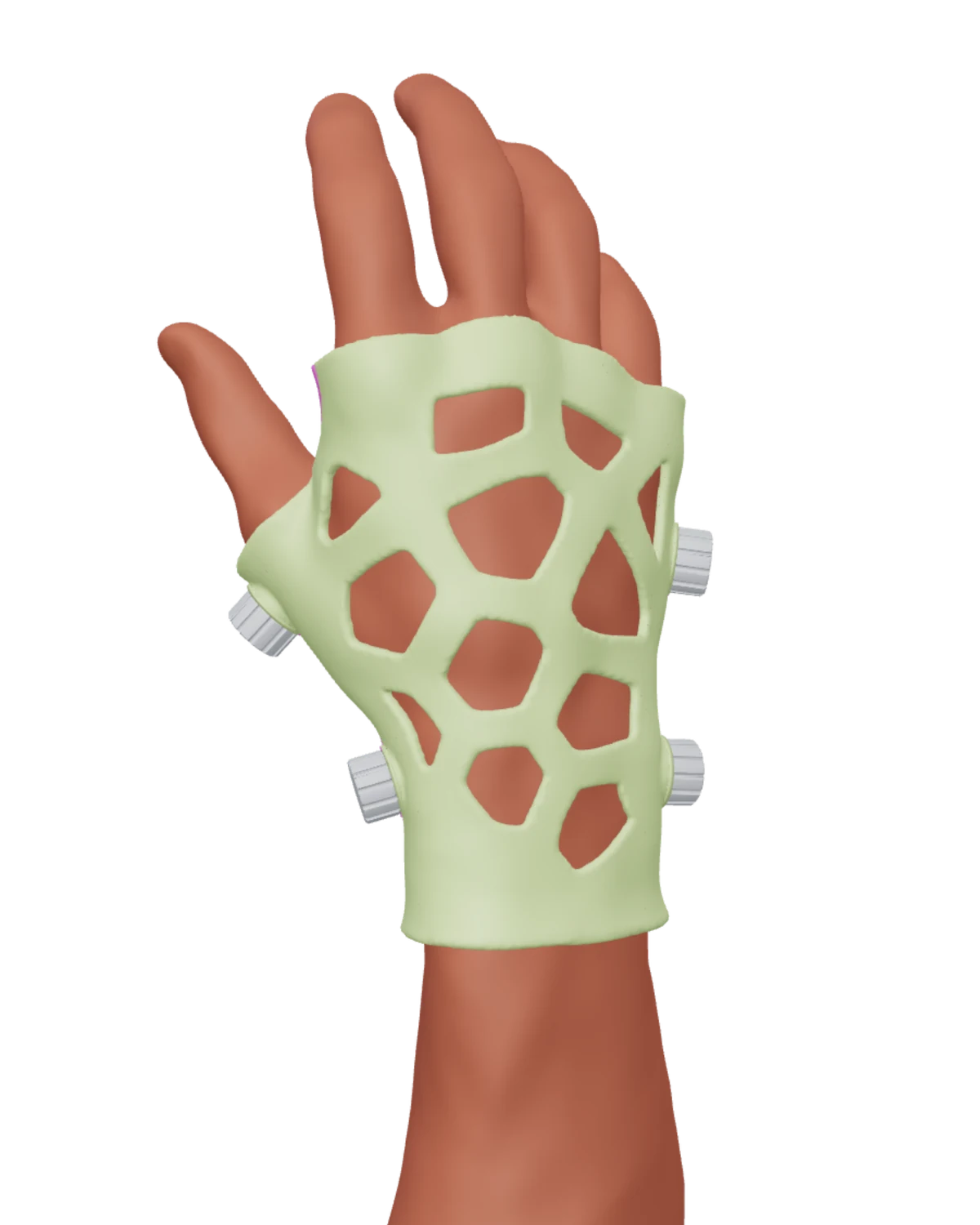
One click straightens the wrist (faint: as scanned), or set its bend, tilt and twist and the fingers yourself. The cast is built on the hand in this pose, not the scanned one.
04
Your design, made once on the model hand, goes onto this one: the fingers free, a palm piece and a back piece, holes, walls 1.5 to 6 mm, screw caps along the seams.
05
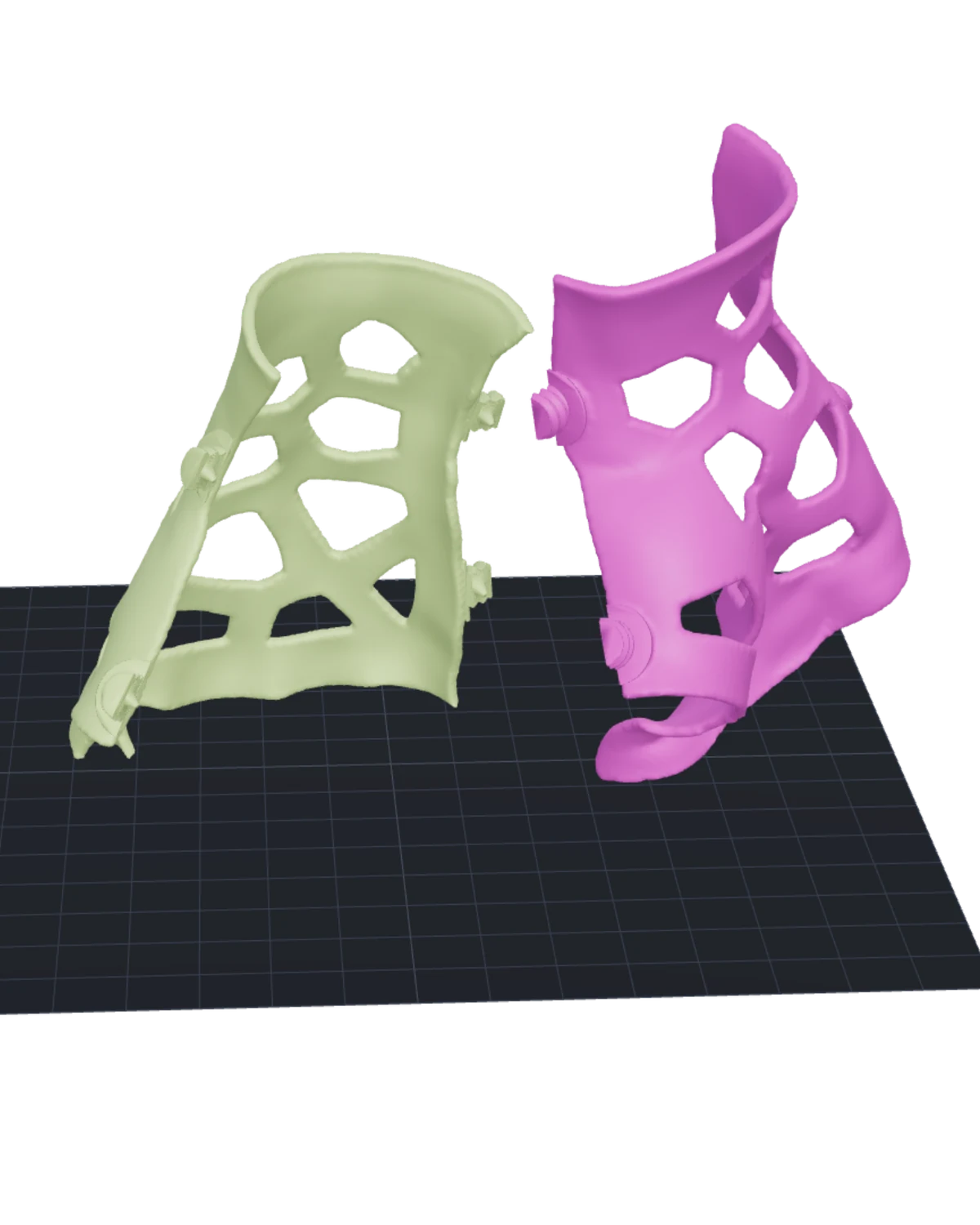
The pieces are turned to need the least support and laid out on build plates, the screw caps on a plate of their own. Save them as STL or 3MF.
The fit
Putting a cast on a scanned arm takes a few clicks, not an afternoon of mesh editing.
No landmarks to place and no mesh to mend by hand. A brush is there for the rare scan that needs it.
Any pose
A scan catches the arm as the patient could hold it while the scanner went round: an injured wrist drops, the fingers curl, and nobody holds still for long.
A cast has to hold the arm in the position chosen for it. Made in the scanned pose, it either keeps the wrist where it should not be, or does not close round the arm once the arm is placed right.
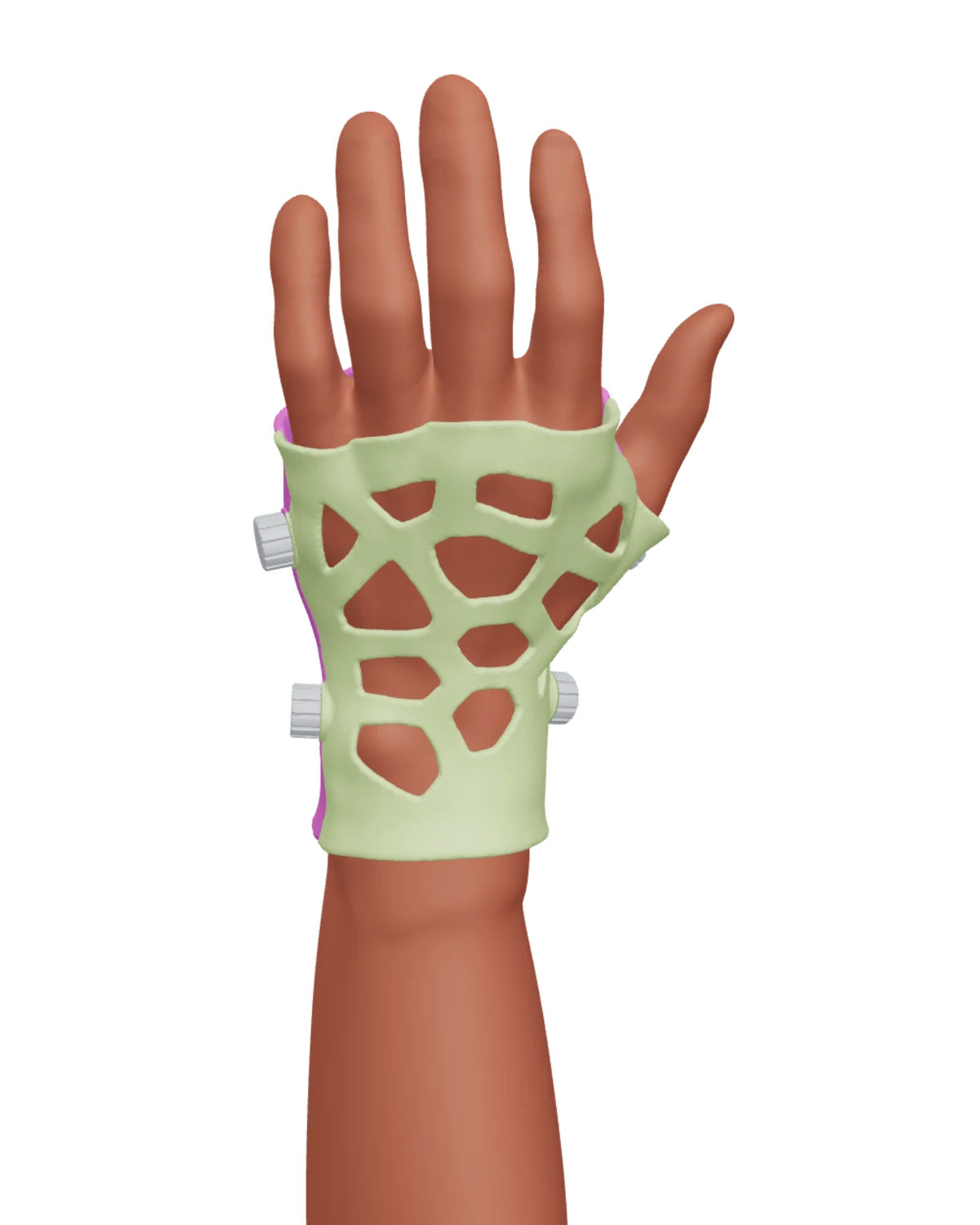
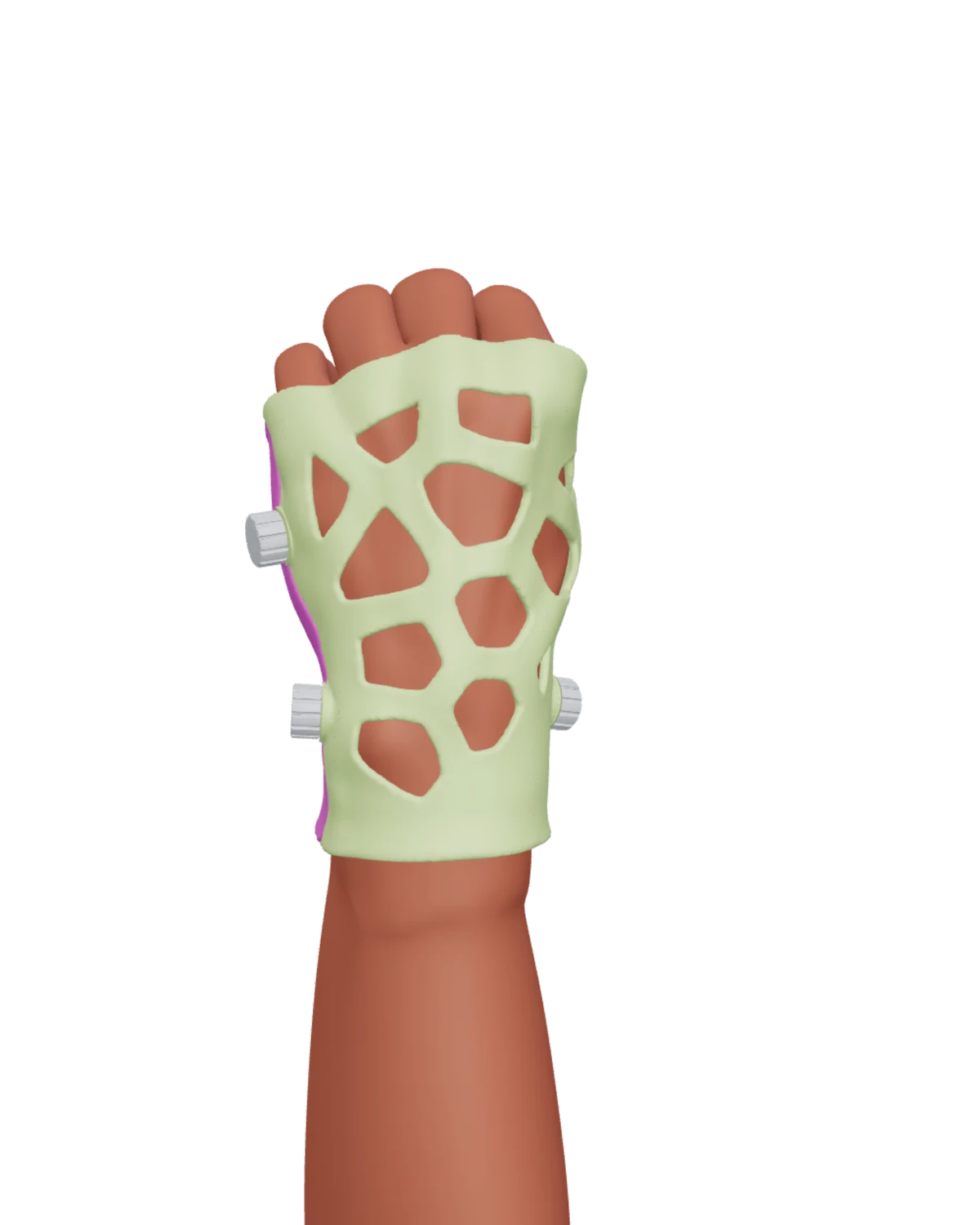
So Brazo moves the fitted hand into the pose you choose, by bending, tilting or twisting the wrist, curling or spreading the fingers, or picking a gesture, and builds the cast on the hand as it will be worn. The design goes with it: the cuts, the holes, the seam and the screws stay where you put them. No second scan.
Who it is for
A made-to-measure, ventilated cast from a scan of the patient's own arm, designed once and fitted to each patient in the pose they need.
Print-ready pieces that close around the arm, turned to need the least support and packed onto build plates, as STL or 3MF.
A parametric hand model, with skeleton, shape and pose, fitted to real scans, and a cast built on it that you can measure.
Questions
We are letting people in a few at a time, starting with the waiting list. We will write to you as soon as there is a place for you.
A 3D scan of the hand and forearm (.ply, .obj, .stl, .off, .xyz, .pts or .pcd), a computer with an up-to-date browser, and a 3D printer for the pieces.
No. Scan the arm in whatever position is comfortable. Brazo moves the fitted hand into the pose the cast must hold, and builds the cast there.
No. Brazo runs on our servers and opens in your browser. Your scans stay in a folder only your account uses.
We keep it, with what describes you, to invite you and to know who is waiting. We only write to you about Brazo and never share it. To be taken off the list, write to carlos@geometryweave.com.
Waiting list
Leave your email and tell us who you are. That is all we need.
You are on the list.
We will only write to you about Brazo, and never share your address. Privacy